
Home › New Hampshire
Plumbers in New Hampshire
Plumbing referrals for homeowners in the Nashua area, Salem and Derry, Manchester and Bedford, and the Seacoast. Each town page covers who supplies the water, sewer or septic, and the local permit office. Call (978) 788-2810 or send the short form. We'll review your request and help you with the next step.
- Free for homeowners
- State rules explained
- Well and septic rules explained
Ask About Plumbing Service in Your Area
Tell us about the job. We'll review it and help you with the next step.
Please add your name, a 10-digit phone number and a valid email.
Sorry, we couldn't save your request just now. Please call (978) 788-2810 so it isn't lost.
We've received several requests from this connection in a short time. Please call (978) 788-2810 and we'll take it from there.
We couldn't finish the spam check. Wait a moment and send it again, or call (978) 788-2810.
Service areas
New Hampshire towns we cover
Each town page covers the water supplier and its rules, public sewer or septic, service line responsibility and the local permit office. Many New Hampshire homes are on private wells and septic, which changes who you call.
Nashua, Hudson & Merrimack
Salem, Windham & Derry
Manchester & Bedford
Portsmouth, Dover & Rochester
State rules
Plumbing in New Hampshire: licenses, permits, wells and septic
Who is licensed. Plumbers and fuel gas fitters are licensed by the Mechanical Licensing Board, part of the Office of Professional Licensure and Certification (RSA 153:27-a). A master plumber must have held a New Hampshire journeyman license for at least six months and passed the exam, and an apprentice works under a master plumber, with direct supervision for the first two years (Mec 300). For a license check, OPLC's license lookup page lists its online tools and says to contact a board directly for anything not listed.
Homeowners. The license rules don't apply to an owner, or an unpaid helper the owner names, doing plumbing in the owner's own single-family detached home or townhouse, but that work still has to go through local permits and inspections and meet the state plumbing code (RSA 153:36, Mec 303.09). The gas exemption is narrower: it covers only an existing single-family stand-alone house the owner occupies as a primary residence.
The code and permits. When we checked in November 2026, the State Fire Marshal's code page listed the 2021 International Plumbing Code as part of the state building code (State Fire Marshal); some town permit forms already refer to the 2024 codes, so ask which edition your inspector uses. Issuing permits and collecting fees is left to each city or town (RSA 155-A:2); where a town has no code enforcement, the State Fire Marshal steps in only if the town asks in writing (RSA 155-A:7). Ask your town's building department what your job needs.
Carbon monoxide. Rental units, multi-family buildings and single-family homes built or substantially rehabilitated after January 1, 2010 need carbon monoxide detection installed to NFPA 720; a home with no attached garage and no fuel-burning appliance is exempt until one is added (RSA 153:10-a).
Private wells. About 46 percent of residents rely on private wells, and no state law requires testing them. The Department of Environmental Services recommends a full test every three to five years and a bacteria and nitrate test every year (NHDES). New or replacement well pumps go in by a pump installer licensed by the Water Well Board.
Septic. A septic system needs plans from an NHDES-permitted designer and is built by a permitted installer (NHDES), though an owner may repair or replace the system for their own home without an installer permit if they follow the state rules (RSA 485-A:36). Before developed waterfront property is sold, a septic system within 250 feet of the water needs a site assessment by a licensed evaluator (RSA 485-A:39).
Lead service lines. Community water systems had to file service line inventories by October 16, 2024, and customers whose line material is unknown or may contain lead get a letter each year until the line is verified or replaced (NHDES).
Last verified November 2026.
Plumbing services
What do you need?

Water Heaters
Tank and tankless replacements, and heaters that leak or run out of hot water.
Drains & Sewer Lines
Slow or backed-up drains and the line from the house to the street or septic tank.
Leaks & Repiping
Leaking pipes, frozen-pipe damage and replacing old supply lines.
Kitchen & Bath Fixtures
Faucets, toilets, sinks, showers and tubs, replaced or added.
Sump Pumps
New and replacement pumps for basements that take on water.
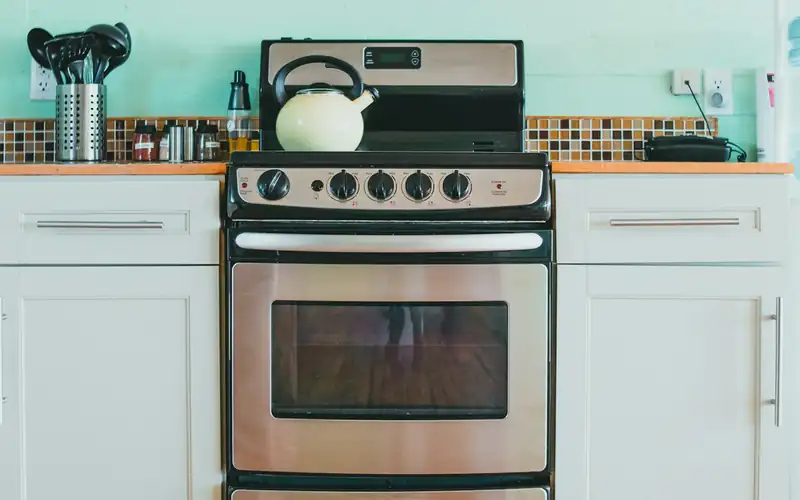
Gas Lines for Appliances
Gas piping for ranges, dryers, heaters and generators.
FAQ
New Hampshire plumbing questions
Can I do my own plumbing in New Hampshire?
In your own single-family detached home or townhouse, yes: the state's plumbing license rules don't apply to an owner doing plumbing work there, or to an unpaid helper the owner designates. The work still needs whatever local permit and inspection your town requires and has to meet the state plumbing code.
Does the homeowner exemption cover gas lines?
Only narrowly. An owner may do fuel gas fitting without a license only in an existing single-family stand-alone house they own and live in as their primary residence, and code, permit and inspection requirements still apply. Otherwise gas work takes a licensed fuel gas fitter.
Who replaces a well pump in New Hampshire?
Installing a new or replacement water pump on a well takes a pump installer licensed by the state Water Well Board. Licensed plumbers and electricians may repair and service well pumps.
How often should I test my well water?
The Department of Environmental Services recommends a full test every three to five years, including arsenic, radon and uranium, and a bacteria and nitrate test every year. It estimates that a quarter or more of private wells have arsenic at or above 5 parts per billion, the limit the state sets for public water systems.
Is there a charge to use New England Plumbers?
No. The call and the referral are free to homeowners. Any estimate and any work are agreed directly between you and the contractor.