
Home › Massachusetts › Wilmington
Plumbers in Wilmington, MA
Wilmington pumps most of its own water from town wells, and most of the town is on septic, under Board of Health rules that go well past Title 5. Call (978) 788-2810 or send the form. We'll review your request and help you with the next step.
- Free for homeowners
- Credentials checked before referral
- Septic and sewered homes alike
Ask About Plumbing Service in Your Area
Tell us about the job. We'll review it and help you with the next step.
Please add your name, a 10-digit phone number and a valid email.
Sorry, we couldn't save your request just now. Please call (978) 788-2810 so it isn't lost.
We've received several requests from this connection in a short time. Please call (978) 788-2810 and we'll take it from there.
We couldn't finish the spam check. Wait a moment and send it again, or call (978) 788-2810.
Plumbing services in Wilmington
What do you need in Wilmington?
Water Heaters
Tank and tankless replacements, and heaters that leak or run out of hot water.
Drains & Sewer Lines
Slow or backed-up drains and the line from the house to the street or septic tank.
Leaks & Repiping
Leaking pipes, frozen-pipe damage and replacing old supply lines.
Kitchen & Bath Fixtures
Faucets, toilets, sinks, showers and tubs, replaced or added.
Sump Pumps
New and replacement pumps for basements that take on water.
Gas Lines for Appliances
Gas piping for ranges, dryers, heaters and generators.
Water, septic and sewer
Town wells, mostly septic and a winter break for septic work
Wilmington runs its own water system: four wells, at Brown's Crossing, Barrow's, Shawsheen Avenue and Salem Street, feeding the Sargent and Butters Row treatment plants. MWRA water tops up the supply, mainly in warm months, and in 2025 more than three-quarters of the town's water came from its own wells (2025 Water Quality Report). The town joined the MWRA as a partial member after contamination took five of its nine wells offline in 2003 (Open Space and Recreation Plan 2015). In 2025 the highest quarterly PFAS6 average was 4.27 ppt, under the 20 ppt state limit (2025 report).
Service lines and meters. The curb stop sits at or near the property line, and everything beyond it belongs to the owner. The town pays for repairs from the main to the curb stop; between the curb stop and the meter, the owner pays the town's labor and materials plus 10% and administrative fees; past the meter, the town does no repairs, and thawing frozen lines is the owner's job. Meters are town property and need a heated, accessible space, and in split-entry houses they can't go under the foyer (Water Rules and Regulations). The inventory the town submitted to MassDEP in October 2024 identified all of its more than 7,000 services as non-lead (Lead Service Line Inventory), and the 2025 90th-percentile lead level was 1.8 ppb (2025 report). Inside the house, see leak repair and repiping.
Septic, not sewer, for most homes. The town's 2015 Open Space and Recreation Plan put about 82% of Wilmington on on-site septic and 18% on MWRA sewer (2015 plan). The sewer system dates to the 1950s, has over 1,700 services and includes a septage receiving facility (Water & Sewer Division).
Board of Health septic rules. Wilmington's regulations go beyond Title 5: a leach bed of at least 800 square feet sized on a four-bedroom design flow (smaller with a recorded bedroom restriction), the lowest floor at least two feet above adjusted springtime high water, risers to grade, an outlet tee that accepts an effluent filter, and installers licensed by the Wilmington Board of Health, with three inspections on every job. Septic "cleaner" additives with organic, acidic or alkaline compounds are banned. No percolation or water-table testing is done after November 30 except to repair a failed system, and no system is installed from December 1 to April 1 unless the Board allows it (Board of Health Code of Regulations).
Private wells. A new well needs a Board of Health permit and must be tested before use or a property sale, and no new drinking-water or other water supply wells may be drilled in the Olin and Sutton Brook Disposal Area groundwater areas of concern until September 21, 2031 (Board of Health regulations).
Irrigation and backflow. Sprinkler systems connect after the meter, need a rain or moisture sensor and an approved backflow device, and may run only between 5 p.m. and 9 a.m.; existing pressure vacuum breakers must sit at least two feet above the highest sprinkler head. Reduced-pressure devices are tested at least twice a year and double checks at least yearly, at $50 a test, and a failed device must be fixed by a licensed plumber within 14 days (Water Rules and Regulations). The town's 2025 water quality report lists mandatory restrictions: sprinklers once a week and no outdoor watering from 9 a.m. to 5 p.m. (2025 report), with tighter levels during drought (water restrictions guidance).
Permits and local rules
Plumbing and gas permits in Wilmington
Wilmington's plumbing and gas permits come from the Building Inspector's office at Town Hall, and only a licensed plumber or gas fitter can pull one. Septic work is permitted separately by the Board of Health.
- Issued by
- Building Inspector's office, Town Hall, 146 Middlesex Avenue, Room 202 (Building Inspector)
- License copy
- Since May 1, 2026, a copy of the plumber's or gas fitter's new updated license must accompany each permit application (Building Inspector).
- Who can pull it
- A Massachusetts-licensed plumber or gas fitter; work can't start until the permit is issued (248 CMR 3.05). Check a license on the state license lookup.
- Taxes
- The property's local taxes must be certified current before any permit is issued (Building Inspector).
- Septic
- A Board of Health permit is needed to install, repair, replace, upgrade or abandon any septic system; the Board charges $200 to inspect an existing system (Board of Health regulations).
Last verified November 2026. Fees, restrictions and deadlines on this page are due for re-checking by May 2027. New England Plumbers is a referral service. We don't pull permits or do plumbing work. The contractor who does the job handles the permit.
Homes in Wilmington
A town of single-family houses, most with their own septic systems
Single-family homes made up about 90% of Wilmington's housing in the town's 2015 plan; building peaked at 190 new single-family homes in 1994, and the first apartment complexes went up between 1998 and 2013 (Open Space and Recreation Plan 2015). A 2004 housing plan counted about 60% of homes as built since 1960 (Affordable Housing Plan 2004).
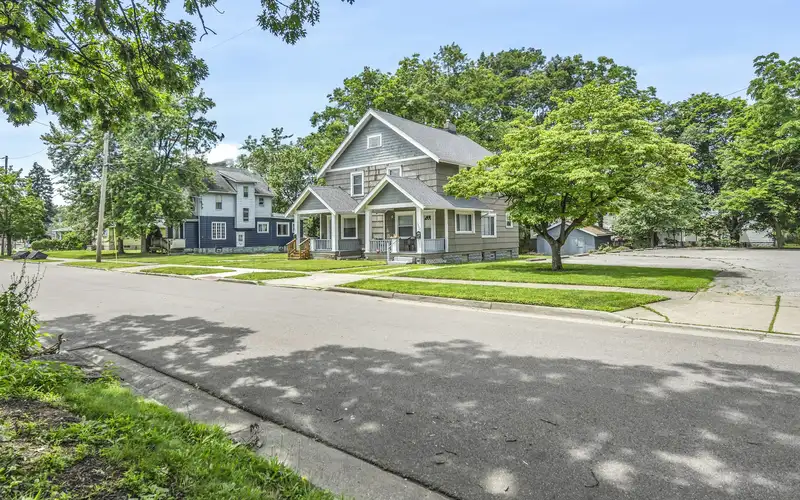
For most of these houses, the plumbing doesn't end at the foundation wall: the septic tank and leach field are part of the system. Because new installations normally stop from December through March, planned septic replacements are best scheduled between April and November, and the Board of Health can make exceptions. For the house side, see drains and sewer lines and fixtures.
FAQ
Wilmington plumbing questions
Is my Wilmington home on sewer or septic?
Most likely septic. The town's 2015 Open Space and Recreation Plan put about 82% of Wilmington on on-site septic systems and about 18% on MWRA sewer, and the town agreed to limit sewer expansion to designated areas of need. Check with the DPW for your street.
Can a septic system be installed in winter?
Generally not. The Board of Health bars septic installation from December 1 to April 1 unless the Board allows it, and percolation and water-table testing stop after November 30 except for repairs of failed systems.
Who pays to fix a leak in my water service?
The town pays for repairs from the main to the curb stop. From the curb stop to the meter, the owner pays the town's labor and materials plus 10% and administrative fees, and the town doesn't repair anything past the meter. Thawing a frozen line is also the owner's responsibility.
When am I allowed to run my sprinklers?
Only between 5 p.m. and 9 a.m. under the town's water rules. The town's 2025 water quality report also lists mandatory restrictions limiting sprinklers to once a week, with a minimum fine of $50 a day, and the limits tighten during drought. Irrigation systems must connect after the meter and have a rain or moisture sensor and an approved backflow device.
Is there a charge to use New England Plumbers?
No. The call and the referral are free to homeowners. Any estimate and any work are agreed directly between you and the contractor.
Nearby