Home › Massachusetts › Westford
Plumbers in Westford, MA
Westford has no public sewer, and about 40% of its properties drink from their own wells, so plumbing here comes with Board of Health rules most towns don't have. Call (000) 000-0000 or send the form. We'll review your request and help you with the next step.
- Free for homeowners
- Credentials checked before referral
- Graniteville to Nabnasset
Ask About Plumbing Service in Your Area
Tell us about the job. We'll review it and help you with the next step.
Please add your name, a 10-digit phone number and a valid email.
Sorry, we couldn't save your request just now. Please call (000) 000-0000 so it isn't lost.
We've received several requests from this connection in a short time. Please call (000) 000-0000 and we'll take it from there.
Plumbing services in Westford
What do you need in Westford?
Water Heaters
Tank and tankless replacements, and heaters that leak or run out of hot water.
Drains & Sewer Lines
Slow or backed-up drains and the line from the house to the street or septic tank.
Leaks & Repiping
Leaking pipes, frozen-pipe damage and replacing old supply lines.
Kitchen & Bath Fixtures
Faucets, toilets, sinks, showers and tubs, replaced or added.
Sump Pumps
New and replacement pumps for basements that take on water.
Gas Lines for Appliances
Gas piping for ranges, dryers, heaters and generators.
Septic and wells
Plumbing in a town with no public sewer
Westford has no public sewer: homes rely on on-site septic systems, and about 40% of properties get their drinking water from a private well (Open Space and Recreation Plan, Private Wells). That puts the Board of Health in the middle of a lot of plumbing decisions.
Water softeners and filters. Westford's septic regulations require softener and filter discharge to go to an approved spot on the property, such as a dry well, rather than into the septic system (Board of Health septic regulations, effective May 1, 2024).
Septic tanks. New and replacement tanks must hold at least 1,500 gallons in two compartments, plastic tank covers aren't allowed, and a home that grows its living area by 50% or more, is rebuilt, or adds an accessory apartment triggers a Title 5 inspection. Systems are installed by Board-licensed installers.
Private wells. Wells and water systems need a Board permit, and irrigation wells need the same permit as drinking wells. Drinking wells must sit at least 100 feet from septic tanks and leach fields. A well must be tested within a year of a sale, and where treatment is needed the Board requires whole-house (point-of-entry) treatment, not under-sink units (Well Regulations).
Well plus town water. A house with both a private well and town water needs a backflow device approved by the plumbing inspector and the water supplier, with the two systems kept completely separate. When you switch to town water, your plumber connects the house to the new meter and disconnects the well (Private Wells and well regulations, Get Connected to Town Water).
Town water. All of Westford's public water comes from groundwater wells; one supply well has been limited by PFAS while treatment is installed (Water Division). The Water Department found no lead or galvanized-requiring-replacement service lines in its records (Service Line Inventory), Its water use policy asks for voluntary odd/even watering from May 1 to October 31, and can make odd/even days and a 9 am–6 pm ban mandatory or ban outdoor watering in a drought, as it did in summer 2026 (Water Use Restriction policy).
Westford, village by village
Mill villages, a hilltop center and lake cottages
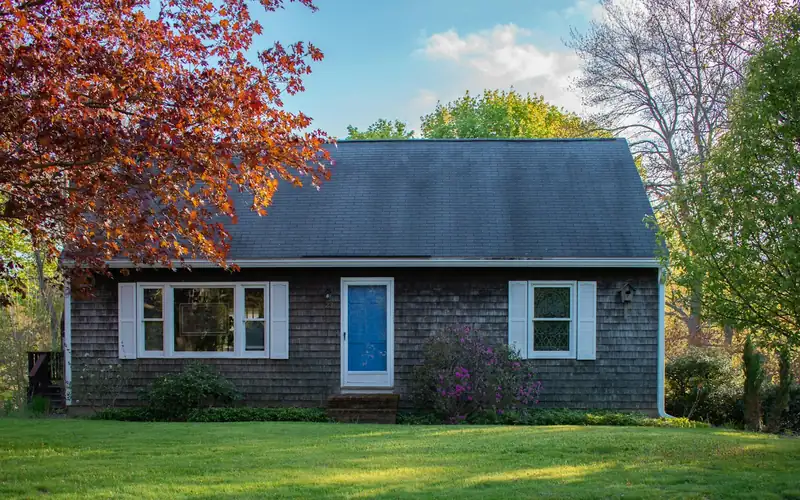
Westford grew as a set of villages around quarries, mills and ponds before suburban building filled in after World War II. Most homes today are owner-occupied single-family houses (Housing Production Plan).

Westford Center
The hilltop town center became a well-to-do residential area with Italianate, Greek Revival, Queen Anne and Colonial Revival houses.
Graniteville
A quarry and worsted-mill village from the 1850s, with double worker cottages and later Colonial Revival double houses.
Forge Village
Grew from ironworks at the Forge Pond outlet, then brick worsted mills, with double houses and four-family row houses from about 1915 to 1925.
Nabnasset
An early mill site that became a lakeside resort around Nabnasset Pond, with bungalows and cabins added in the 1920s.
Parker Village
Stone walls, open fields and historic farmhouses, as the town's open space plan describes it.
Village histories draw on the Massachusetts Historical Commission's Westford survey report.
Permits and local rules
Plumbing and gas permits in Westford
In Westford, plumbing and gas permits come from the Building Department at Town Hall, 55 Main Street, and can be filed online at permits.westfordma.gov. Contractors must attach their current license, insurance and a workers' compensation affidavit to every application (Building Department).
Close out the permit. The town notes that a permit without a final inspection stays open, which can potentially cause problems when the property is sold. Ask your plumber to schedule the final inspection.
Who pulls it. Under state rules, plumbing and gas permits are issued only to licensed plumbers and gas fitters, and work can't start until the permit is issued (248 CMR 3.05). Check a license on the state license lookup.
Septic and well work. Septic installation is done by Board of Health-licensed installers, and only certified well drillers may plug a well. We refer the plumbing inside the house, not septic or well drilling work.
Last verified November 2026. New England Plumbers is a referral service. We don't pull permits or do plumbing work. The contractor who does the job handles the permit.
FAQ
Westford plumbing questions
Is any of Westford on town sewer?
Essentially no. The town's open space plan says Westford has no public sewer and that homes and businesses use on-site septic systems under Title 5 and Board of Health rules. A few town facilities use small septic-effluent sewers.
What does it take to switch from a private well to town water?
The Water Department installs the service line and meter after you pay the application, installation and development charges; you hire an excavator for the trench; and your plumber connects the house to the meter and disconnects the well, which can't stay connected to the house system. The town lists the current fees on its Get Connected to Town Water page.
Can I keep my well for irrigation after connecting to town water?
Irrigation wells need the same Board of Health permit as drinking-water wells, can't connect to the drinking-water or public supply, and the regulations bar mounting an irrigation-well spigot on the house. A building with both a well and town water needs an approved backflow device.
Does Westford have lead service lines?
The Water Department reviewed its records and reported no lead lines, no galvanized lines needing replacement and no lines of unknown material.
Is there a charge to use New England Plumbers?
No. The call and the referral are free to homeowners. Any estimate and any work are agreed directly between you and the contractor.